- 28 September 2026
Label translation for packaged products sold in the European Union
EU label translation for packaged products
Ingredients, warnings and the PPWR: professional translation helps manufacturers and exporters prepare product labels for European markets.
Labels affect market access
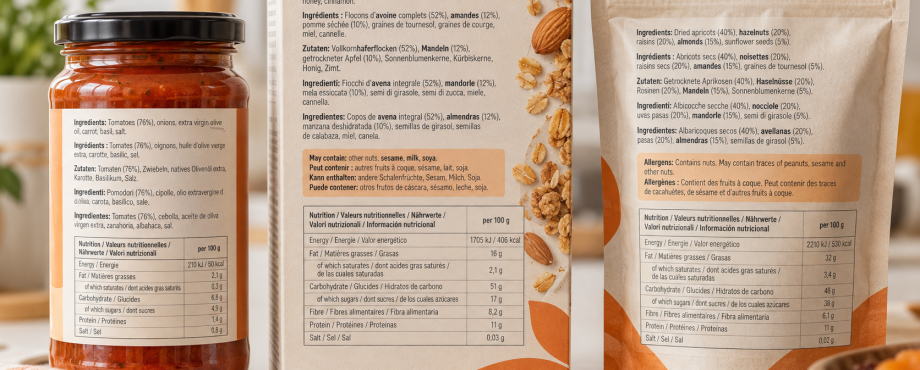
When a company exports a packaged product, label translation forms part of preparing that product for its destination market. An error in an allergen, warning, instruction or unit of measurement may confuse consumers and force the company to correct or reprint the packaging.
In the European Union, mandatory language and content depend on the product category and country of sale. Label translation therefore requires the team to identify which information must be translated, which terminology is regulated and how the content will remain legible in a restricted space.
What the new PPWR changes
Regulation (EU) 2025/40 on packaging and packaging waste, known as the PPWR, entered into force on 11 February 2025 and has applied in stages since 12 August 2026. It introduces requirements concerning substances in packaging, recyclability, recycled content, reuse, waste prevention and labelling.
Not every new environmental label became mandatory on the first day. The harmonised material-composition label under Article 12 follows its own timetable: it will apply from 12 August 2028 or 24 months after the relevant implementing acts, whichever is later.
Ingredients and product information
The PPWR regulates packaging but does not replace product-specific legislation. For food, Regulation (EU) No 1169/2011 covers the food name, ingredients, allergens, nutrition information and other mandatory particulars. This information must appear in a language easily understood by consumers in the country where the food is marketed.
For cosmetics, Regulation (EC) No 1223/2009 governs information on the container and packaging. Ingredient lists use the applicable common nomenclature, generally INCI, and should not be freely translated. The product function, precautions and other wording may require linguistic adaptation for the market.
Businesses that need this service
Food producers, wineries and drinks manufacturers.
Cosmetics, personal-care, food-supplement and cleaning-product companies.
Chemical and industrial businesses and other manufacturers of packaged goods.
Importers, distributors, e-commerce brands and businesses entering new markets.
Packaging studios, printers and regulatory consultancies.
Why use a professional agency
A specialist native-language translator can identify unnatural wording, false friends and ambiguous instructions. Native proficiency must be combined with sector experience, research into regulated terminology and an understanding of each label element.
An agency like Easy Translations coordinates languages, builds glossaries, maintains consistency across product ranges and controls versions when a formula or pack changes. It can also review wording in the final artwork before printing.
Technology with human review
AI and translation tools can retrieve terminology, compare versions and accelerate large projects. The final label still needs specialist human review of allergens, warnings, figures, units, regulated names and alignment between languages. Information about products that have not been launched must also be handled in a suitable secure environment.
Responsibility for final compliance
Linguistic review does not replace regulatory advice. The manufacturer, importer or responsible person must confirm the legal requirements for the product and market. Easy Translations can work from requirements validated by the client or liaise with its quality team or regulatory adviser.
Do you need to translate or update product labels? Send us the artwork, languages, destination markets and project schedule. We will provide a tailored quotation.